
After tax season, business owners often take one of two paths.
Some keep every receipt, statement, form, and email because deleting anything feels risky.
Others place all their tax records in a folder and leave them there until the next filing season.
Both habits can create the same problem: the business has documents, but no clear system for using them.
That distinction matters.
Tax records can support a return, explain a transaction, and help track what happened inside the business. Still, collecting files alone does not create financial clarity.
The value comes from knowing what each document proves, how long it matters, and when the information should guide a decision.
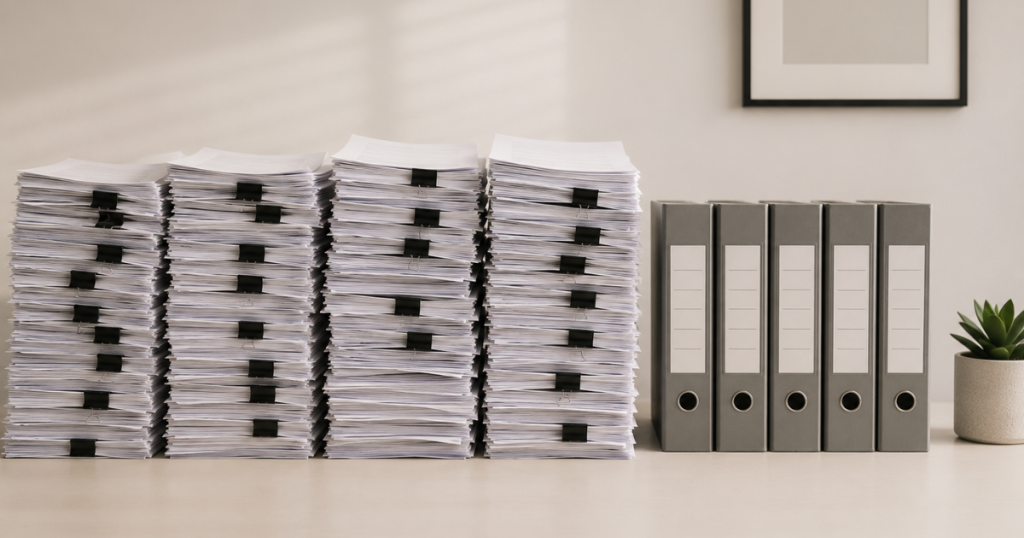
Keeping more tax records does not always help
Keeping every file may feel safe.
But after a while, important documents get mixed with old copies, repeated files, and papers the business no longer needs. Then, finding the right record becomes harder.
The IRS does not expect every document to stay forever. How long you should keep a file depends on what it proves.
For example, some records show income. Others prove expenses, deductions, or tax credits. These documents need to stay available while the IRS can still review that tax return. In some cases, the business may need to keep them longer.
So each tax record needs two things:
A clear reason to keep it.
A clear idea of how long it should stay.
The type of document also matters.
The IRS recommends keeping records that show where business money came from and where it went. That can include invoices, receipts, paid bills, deposit records, and canceled checks.
These files help prove that the numbers in the bookkeeping and tax return are correct.
Before keeping a document, ask:
Why does the business need it?
Which year does it belong to?
Where should it be stored?
When can it be safely removed?
These questions make important files easier to manage and find.
Keeping every document can also create risk
Many business owners keep old documents because they are afraid of needing them later.
That fear is normal. Some files are important and should stay safe and easy to find.
But keeping everything forever can also cause problems.
Tax records often include private information, such as Social Security numbers, bank details, home addresses, and income information.
So the more old files the business keeps, the more private information it needs to protect.
The FTC recommends keeping important documents in a safe place. Once a file is no longer needed, the business should destroy it in a safe way.
For paper files, that usually means using a shredder.
For digital files, it means deleting them from the computer, cloud storage, backups, and other places where copies may still exist.
A simple system makes this easier.
The business keeps the files it still needs.
Each document has a clear reason to stay.
Important records have a safe place.
Old files leave the system when they no longer serve a purpose.
That is how the business protects its information without keeping more than it needs.
Tax records should help you understand the business
Tax records can do more than help with a tax return.
They can show where the money came from, where it went, which costs increased, and how the business changed during the year.
But the files need to be organized first.
A folder full of receipts does not explain why profit went down.
A bank statement does not show which service costs too much.
An old tax return does not tell the owner what to change next.
The business needs to connect each file to the numbers.
That is when tax records become useful.
A receipt shows an expense.
An invoice shows income.
A payroll report shows how much the business spent on the team.
A tax return gives a clear view of one full year.
Some files may also need to stay longer because they prove income, expenses, payroll, property costs, or other important tax information.
When these records are clear and easy to find, the owner can understand what happened, spot changes, and make better decisions for the next year.

Organized businesses use tax records in a clear way
An organized business does not need to keep every file forever.
It needs the right documents, stored in the right place, with a clear reason for keeping them.
This makes tax season easier. It also helps during the rest of the year.
The owner can check past numbers more easily. Receipts and invoices match the bookkeeping. Missing files become easier to notice. Business decisions come from clear information.
The ACP team can help organize your financial records, connect them to your bookkeeping, and create a simple system for the year ahead.
Fill out the form so we can understand your business and guide you on the next step.
👉🏻 click here
Tax records become useful when the business can find them, understand them, and use them to make better decisions.
Compliance Note
This article is for educational purposes only. It is not legal or tax advice. The time you need to keep a document depends on your business and tax situation. Talk to a qualified professional before deleting important tax or financial records.